
Choosing the right teen driving school in Portland, Oregon is one of the most important decisions you’ll make for your teen’s safety. With multiple teen driving school Portland Oregon options offering different programs, pricing structures, and teaching approaches, how do you know which one will truly prepare your teen for a lifetime of safe driving?
In this comprehensive guide, we’ll walk you through everything Portland parents need to know about teen driver education—from understanding ODOT-approved programs and Oregon’s Graduated Driver Licensing (GDL) requirements to comparing the best teen driving school Portland Oregon providers and understanding what makes quality instruction. Whether you’re searching for “teen driving school near me” or trying to evaluate “the best driving academy” for your family, this guide provides the insider knowledge you need to make an informed decision.
As the founder of 1st Learn to Drive, a Top tier teen driving school Portland Oregon, I’ve spent over a decade training Portland-area teens annually. I’ll share what I’ve learned about what works, what doesn’t, and how to give your teen the best possible start to their driving career with professional driver education.
Key Takeaways:
- Driver education reduces teen crash risk by up to 85%
- ODOT-approved teen driving school Portland Oregon programs qualify teens for DMV drive test waivers and reduced practice hours
- Instructor experience and teaching methodology matter more than price
- The right program combines classroom learning, behind-the-wheel training, and structured practice
- Portland-specific training should address local challenges like MAX trains, bike lanes, and bridge navigation
Table of Contents
- Why Teen Driver Education Matters in Oregon
- Understanding ODOT Requirements & Approved Programs
- What to Look for in a Portland Teen Driving School
- Comparing Portland Area Driving Schools
- What Quality Driver Education Curriculum Looks Like
- Instructor Qualifications & Experience That Matter
- Behind-the-Wheel Training: What Your Teen Should Learn
- Portland-Specific Driving Challenges & Training
- The Parent’s Role in Teen Driver Education
- Understanding Pricing & Getting the Best Value
- Success Rates & What They Really Mean
- Making Your Decision: Questions to Ask
Why Teen Driver Education Matters in Oregon
Let’s start with the most important question: does professional driver education actually make a difference? The answer, backed by decades of Oregon crash data, is an unequivocal yes. Choosing the right teen driving school Portland Oregon can literally save your teen’s life.
The Statistics That Should Concern Every Parent
For Oregon drivers aged 15-21, the statistics are sobering:
- 91% of fatal teen accidents involve teens who did NOT complete approved driver education
- 85% of teen car crashes involve teens who did NOT complete formal driver education training
- 87% of teen traffic citations are issued to teens who did NOT complete driver education
These aren’t just numbers—they represent preventable tragedies. Approved driver education dramatically reduces your teen’s risk of being in that dangerous 85-91% group.
Why Modern Driving Is More Complex Than When You Learned
Many parents remember learning to drive in the 1980s or 1990s when a permit test and some parking lot practice were considered sufficient. Today’s driving environment is exponentially more complex:
- Traffic density: Portland metro traffic has increased dramatically, with more vehicles, cyclists, pedestrians, and light rail interactions
- Distraction risks: Smartphones, navigation systems, and in-car technology create constant distraction temptations
- Vehicle complexity: Modern cars have dozens of electronic systems, advanced safety features, and new blind spots
- Infrastructure changes: Protected bike lanes, roundabouts, complex intersections, and MAX train crossings weren’t as prevalent 20-30 years ago
As I discuss in our article Why Is It So Hard to Teach My Teen to Drive?, parents are often surprised by how much more demanding teen driver education has become—and why professional instruction from a quality teen driving school Portland Oregon is more valuable than ever.
The Long-Term Benefits Beyond Passing the Test
Quality teen driver education provides benefits that extend decades beyond the DMV test:
- Lower lifetime crash and citation rates
- Better hazard recognition and defensive driving habits
- More confident, less anxious driving
- Reduced insurance premiums throughout their driving career
- Skills that protect them through different life stages and driving conditions
Understanding ODOT Requirements & Approved Programs
Oregon has specific requirements for teen driver education programs, and understanding the difference between ODOT-approved and non-approved programs is crucial when selecting a teen driving school Portland Oregon.
What ODOT Approval Means
The Oregon Department of Transportation (ODOT) certifies driver education programs that meet rigorous standards outlined in the Oregon Parent/Teen Driver Education Playbook R3 and DMV Form 7190.
ODOT-approved programs must include:
- Minimum 30 hours of classroom instruction covering Oregon traffic laws, defensive driving, hazard perception, and risk management
- Minimum 6 hours of behind-the-wheel instruction with a certified instructor (many programs offer more)
- Minimum 6 hours of observation time where students learn by watching peers drive
- Curriculum aligned with Oregon Teen Driver Task Standards (TDTS)
- Instructors who complete 120 hours of ODOT training plus 15 hours of continuing education every two years
- ODOT and DMV-certified instructors with background checks
Benefits of ODOT-Approved Driver Education
Teens who complete an ODOT-approved driver education program at a certified teen driving school Portland Oregon qualify for significant advantages:
Oregon’s Graduated Driver Licensing (GDL) System
Understanding Oregon’s GDL system helps parents appreciate how driver education fits into the licensing timeline:
- Age 15: Eligible for instructional permit after passing knowledge test
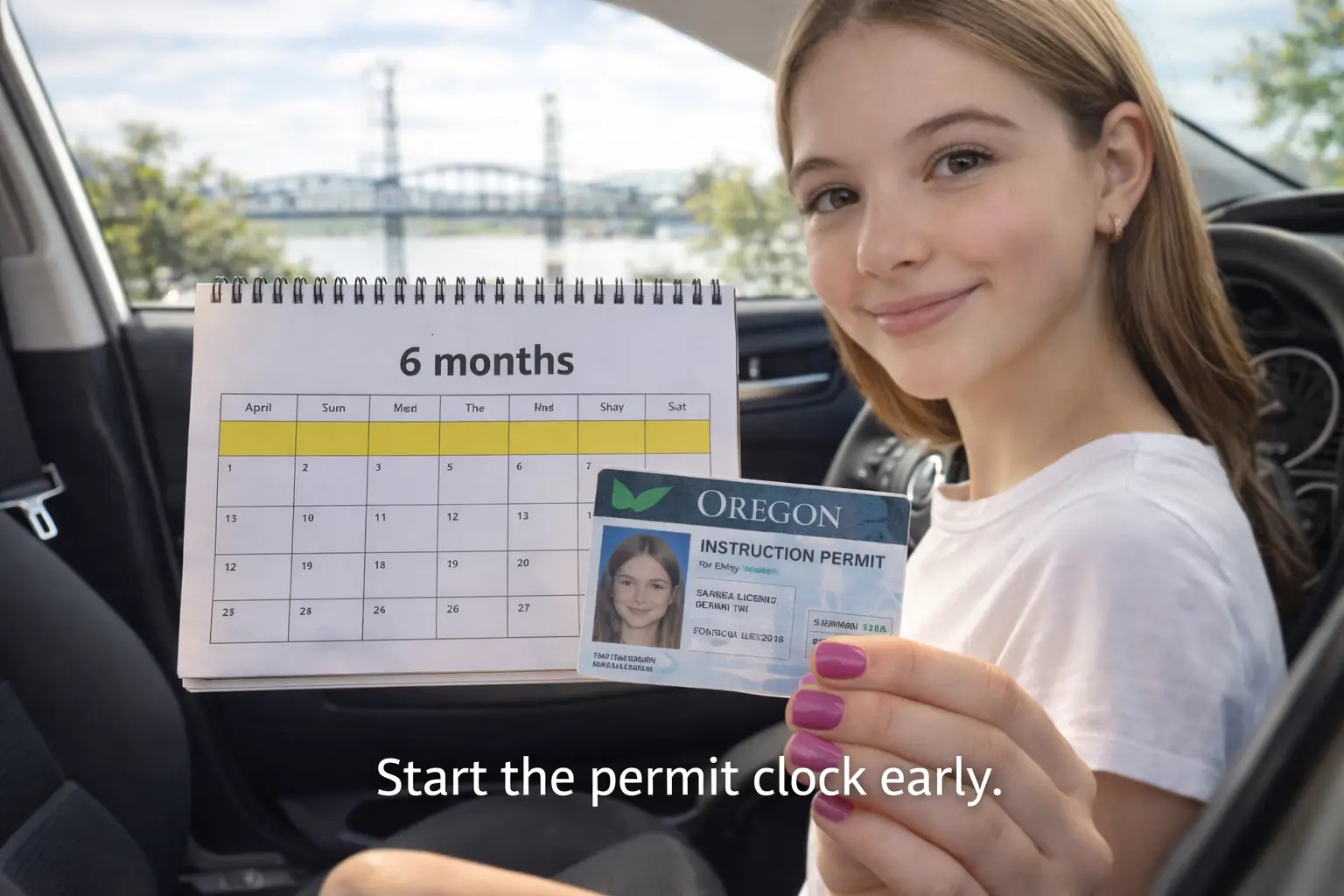
- Permit Phase: Must hold permit for 6 months and complete supervised practice (50 hours with ODOT-approved education, 100 hours without)
- Provisional License: Available at age 16 with completed requirements and passed drive test (or test waiver from ODOT program)
- Provisional Restrictions: No passengers under 20 for first 6 months, no driving midnight-5am, graduated to full license at 17 or 18 depending on driving record
For complete details, reference the official Oregon DMV Teen Driving website.
What to Look for in a Portland Teen Driving School
Not all driving schools are created equal. Here’s what distinguishes exceptional teen driving school Portland Oregon programs from mediocre ones:
1. Instructor Experience & Credentials
The quality of instruction depends entirely on the instructor. Look for:
- Years of teaching experience: Instructors with 5+ years and thousands of behind-the-wheel sessions have seen every learning challenge and know how to adapt
- ODOT certification: 120 hours of initial training isn’t a suggestion—it’s the baseline for competent instruction
- Continuing education: Instructors should complete required 15-hour updates every two years minimum, with the best instructors pursuing additional training
- DMV certification and background checks: Non-negotiable for your teen’s safety
- Teaching methodology: Ask about their approach—do they use proven educational frameworks or just “drive around”?
2. Comprehensive Curriculum Design
Quality driver education programs follow structured lesson plans, not random driving practice. Ask about:
- How classroom content connects to behind-the-wheel training
- Whether homework reinforces key concepts
- If practice requirements are clearly outlined
- How skills progress from basic to advanced
- Whether the program addresses Portland-specific challenges
3. Student-to-Instructor Ratio
Behind-the-wheel training works best with small groups:
- 2:1 ratio (two students, one instructor): Ideal for learning through both driving and observation
- 1:1 private lessons: Faster skill development but more expensive
For classroom instruction, maximum class sizes of 25-30 students allow for individual attention and questions.
Classroom on zoom which provided more family time as your not out fighting traffic to get to class and then waiting around.
4. Safety Record & Success Rates
Ask potential driving schools about:
- First-time DMV test pass rates (anything above 80% is good, 90%+ is excellent)
- How many students they train annually (volume indicates reputation)
- Whether they track post-licensing safety outcomes
- What guarantees they offer if students don’t pass
5. Training Vehicle Quality
Your teen will learn in the school’s vehicles, so ask about:
- 2024 Toyota Cross hybrid (New-model hybrid vehicles)
- Safety equipment including dual instructor-controlled brakes
- Vehicle type (SUVs provide better visibility and learning platform)
- Vehicles maintenance is standard indicator lights that monitor oil viscosity.
6. Flexibility & Support Systems
The best teen driving schools offer:
- Multiple class locations serving different Portland-area communities
- Flexible scheduling options (evening, weekend, online components)
- Learning management systems like public schools and colleges for homework and progress tracking (we all use Canvas)
- Clear communication channels with instructors and staff
- Alternative program options (condensed courses, private lessons, etc.)
- Payment plans or financial assistance options
Comparing Portland Area Driving Schools
Portland has several established driver education providers. While I run 1st Learn to Drive, a top-rated teen driving school Portland Oregon, I believe in transparent comparisons so you can make the best choice for your family.
Key Portland-Area Driver Education Providers
1st Learn to Drive
- ODOT Approved: Yes, with ODOT-TSO approval
- Experience: Over 10 years serving Portland families
- Instructor Experience: Average 4 years, senior instructor 13+ years with estimated 13,000-26,000 training drives
- Program Structure: 30 hours classroom, 12 hours behind-the-wheel (6 sessions x 2 hours), 6 hours observation
- Locations Served: Inner SE Portland (Cleveland High), Lloyd Center (Benson Polytechnic), SW Portland Multnomah (Ida B. Wells), Milwaukie, Clackamas, Happy Valley (Adrienne C. Nelson), Gresham
- Success Rate: Fpr students that follow the program 90% first-time DMV pass rate
- Unique Features: Homework completed in classroom, comprehensive Canvas, structured homework system, Series BTW alternative program, signature blind-spot check protocol
- Teaching Methodology: Acronym-based learning (L-S-M-I-L-E, M-S-M-O-G), “correct information first time” philosophy, structured lesson plans for all drives
Questions to Ask When Comparing Schools
- How many years has your most experienced instructor been teaching?
- What’s your first-time DMV pass rate?
- How many students per vehicle during behind-the-wheel training?
- What happens if my teen doesn’t pass on the first attempt?
- Can I see your curriculum outline and homework expectations?
- What specific Portland-area routes and challenges do you cover?
- Do you offer makeup lessons if my teen is sick?
- What learning management system or homework platform do you use?
- Are payment plans available?
- Can I speak with references from recent graduates’ families?
What Quality Driver Education Curriculum Looks Like
The difference between adequate and exceptional driver education often comes down to curriculum design and teaching methodology at your chosen teen driving school Portland Oregon.
Classroom Instruction: Beyond Boring Lectures
Effective classroom instruction for teens requires engaging, interactive approaches:
- Real-world scenario analysis: Using Portland crash videos, near-miss situations, and local traffic patterns
- Oregon-specific content: Focusing on state laws, GDL requirements, and regional driving challenges
- Memory aids and frameworks: Teaching systems like IPDE (Identify, Predict, Decide, Execute) and memorable acronyms
- Interactive discussions: Encouraging questions, peer learning, and critical thinking about risk
- Technology integration: Using simulation software, online quizzes, and driving scenario apps
The Power of Acronyms & Memory Systems
Quality programs use proven memory techniques. For example, at 1st Learn to Drive we teach:
- L-S-M-I-L-E (pre-drive checks): Look and lock, Seat/steering wheel/safety belt, Mirrors, Ignition, Lights, Emergency brake
- M-S-M-O-G (lane changes): Mirror, Signal, Mirror, Over shoulder, Go when clear
- Target/Target Area: Where to look while driving
- Reference Points: How to position the vehicle accurately
- Lane Positions 1-5: Proper placement within a lane for different situations
These frameworks give teens simple, memorable systems for complex decisions—exactly what’s needed in high-stress driving situations.
Behind-the-Wheel Progression
Professional behind-the-wheel training should follow a clear skill progression, not random driving. A quality program structures drives like:
Drives 1-2: Foundation Skills
- Vehicle familiarization and control basics
- Residential neighborhood practice
- Low-speed maneuvering and parking
- Applying pre-drive check systems (L-S-M-I-L-E)
- Basic turning and intersection approach
Drives 3-4: Building Confidence
- Arterial roads and 35mph speeds
- round-about intersections
- Introduction to multi-lane roads
- Lane positioning and space management
- Intro to backing up
- Protected left turns
Drives 5-6: Increasing Complexity
- Unprotected left turns and gap judgment
- Busier traffic scenarios
- Correct lane change techniques (M-S-M-O-G)
- Multiple lane road navigation
Drives 7-8: Advanced Skills
- Freeway merging and highway speeds
- Complex traffic patterns
- Emergency avoidance techniques
- Adverse weather simulation (if conditions allow)
- Downtown urban driving
Drives 9-10: Mastery & Polish
- Integration of all learned skills
- Challenging routes in teen’s home area
- Parallel parking mastery
- Test-route practice
- Confidence building for independent driving
Final Drive: Evaluation
- Comprehensive assessment using DMV standards
- Identification of any remaining weak areas
- Certification for DMV test waiver (if passed)
- Recommendations for continued practice
The Critical Role of Homework
Never underestimate homework’s importance in driver education. Quality programs assign homework that:
- Reinforces classroom concepts before behind-the-wheel application
- Requires practice of specific skills (blind spot checks, reference points, etc.)
- Prepares students for upcoming driving challenges
- Involves parents in the learning process
- Tracks progress and identifies knowledge gaps
At our school, we’ve found that students who complete all homework and have the required 50 hours practice have significantly higher pass rates—which is why we guarantee to pay for a second DMV drive test as long as a student completes all homework but doesn’t pass the first time.
Instructor Qualifications & Experience That Matter
Your teen’s instructor makes all the difference. Here’s what separates adequate instructors from exceptional ones at the best teen driving school Portland Oregon programs:
Minimum Qualifications vs. Excellence
Minimum ODOT Requirements (baseline):
- 120 hours of initial instructor training
- 15 hours continuing education every 2 years
- DMV certification
- Background check
Signs of Exceptional Instructors:
- 5+ years of teaching experience (1,000+ behind-the-wheel sessions annually)
- Pursue additional certifications beyond ODOT minimums
- Stay current with traffic safety research and teaching innovations
- Demonstrate patience and adaptability for different learning styles
- Receive consistent positive feedback from students and parents
- Continuously refine teaching methods based on student outcomes
Why Experience Matters So Much
An instructor with 10+ years and 10,000+ training drives has encountered virtually every learning challenge, personality type, and difficult situation. This experience allows them to:
- Quickly identify each student’s learning style and adapt instruction
- Anticipate common mistakes before they happen
- Remain calm in stressful situations (which helps students stay calm)
- Provide precise, helpful feedback rather than generic corrections
- Build confidence in nervous students while tempering overconfidence in others
At 1st Learn to Drive, our senior instructor’s 13 years of experience translates to an estimated 13,000-26,000 individual behind-the-wheel training sessions—an invaluable depth of expertise that newer instructors simply can’t match.
The Importance of Background Checks
Your teen will spend hours alone in a vehicle with their instructor. Our commercial grade camera systems, means they are not alone. All reputable driving schools should require cameras in the car and verify these checks for every instructor.
The cameras are not cheap amazon type, they are 4K out the front and 750K inside the cab with sound recording. 4K iis better than most a definition TV sets. We have had 5 redlight tickets in the past 4 years, we have won every single one.
Our cameras in the cars are better than State red-light cameras, since they plug directly into the brain of the driving school cars.
Behind-the-Wheel Training: What Your Teen Should Learn
Behind-the-wheel training is where classroom knowledge transforms into practical skill. Here’s what comprehensive behind-the-wheel driver training should include:
Essential Maneuvers & Techniques
Vehicle Control Fundamentals
- Smooth acceleration and braking
- Proper steering techniques (hand-over-hand vs. push-pull)
- Lane centering and tracking straight
- Speed management and cruise control use
Intersection Skills
- Stop sign approaches and complete stops
- Traffic light timing and decision-making
- Protected and unprotected left turns
- Right-of-way rules in complex scenarios
- Blind spot checks at EVERY intersection (our signature technique)
Lane Changes & Merging
- M-S-M-O-G protocol for every lane change
- Gap judgment and timing
- Freeway on-ramp acceleration and merging
- Freeway off-ramp slowing and positioning
- Multi-lane road navigation
Parking Skills
- Parallel parking using reference points
- Angle parking and back-in parking
- Parking lot navigation and safety
- Three-point turns and K-turns
Driving Techniques
- Space cushioning (2-4 second following distance)
- Scanning patterns (near, far, sides, mirrors)
- Hazard identification and prediction
- Emergency braking and avoidance
- Driving in rain and reduced visibility
The Value of Observation Time
Many families undervalue the 6 hours of observation time, but it’s actually crucial for learning. When one student drives while another observes from the back seat, the observer:
- Learns from peers’ successes and mistakes without the stress of being behind the wheel
- Develops hazard recognition skills by watching traffic unfold
- Hears instructor feedback that applies to their own driving
- Builds understanding of common errors and corrections
- Gains confidence by seeing that everyone struggles with similar challenges
Research shows that observation learning accelerates skill development—it’s not “wasted” time.
Portland-Specific Driving Challenges & Training
Generic driver education isn’t enough—your teen needs training specific to Portland’s unique challenges from an experienced teen driving school Portland Oregon.
MAX Light Rail Interactions
Portland’s extensive MAX system creates unique challenges:
- Understanding light rail right-of-way rules
- Safe crossing procedures at MAX intersections
- Recognizing MAX signals and warnings
- Avoiding tracks during rain (slippery metal)
- Navigating downtown areas with frequent MAX crossings
Bike Lane Navigation
Portland’s bike-friendly infrastructure requires specific skills:
- Checking for cyclists before right turns
- Understanding protected vs. standard bike lanes
- Safe passing distances (3 feet minimum)
- Door-zone awareness when parking
- Yielding to cyclists in bike boxes at intersections
Bridge Approaches & Navigation
Portland’s many bridges present unique challenges:
- Narrow lanes on older bridges
- Wind gusts on elevated structures
- Complex merge patterns (Fremont Bridge, Morrison Bridge, etc.)
- Traffic congestion at bridge approaches
- Steel grating traction differences in rain
Weather-Related Challenges
Oregon weather demands specific training:
- Rain driving: Reduced traction, hydroplaning prevention, increased following distance
- Fog navigation: Low-beam use, speed reduction, increased caution
- Occasional snow/ice: While rare, teens need basic winter driving principles
- Sun glare: Positioning to minimize glare during sunrise/sunset commutes
Downtown Portland Grid System
Downtown’s one-way streets and complex grid require practice:
- One-way street navigation and signage recognition
- Lane choice for turning from one-way streets
- Pedestrian-heavy areas and crosswalk yielding
- Parking challenges and garage navigation
- Event-driven traffic pattern changes
School Zones & Pedestrian Areas
Training should include high-pedestrian areas near schools your teen will attend or pass:
- School zone speed limits and timing
- High school pickup/drop-off procedures
- Crosswalk laws and pedestrian right-of-way
- Residential area speed management
The Parent’s Role in Teen Driver Education
Professional driver education is essential, but parents remain the most influential factor in teen driving safety.
Why Parent Involvement Matters
Research consistently shows that teens whose parents actively participate in their driving education have:
- 50% fewer crashes in the first year of driving
- Better long-term safety records
- More consistent use of safety features (seatbelts, safe speeds)
- Lower rates of distracted and impaired driving
Practice Between drive Lessons
Professional instruction provides the framework, but teens need extensive practice to build automaticity. Parents should:
- Practice what instructors taught: Reinforce the same techniques, terminology, and standards
- Start in low-stress environments: Empty parking lots and quiet residential streets before busier roads
- Gradually increase difficulty: Match practice to your teen’s current skill level
- Focus on specific skills: Each practice session should target particular maneuvers
- Maintain calm: Your anxiety transfers to your teen—stay patient and positive
- Track practice hours: Use official Oregon practice logs to document progress
Why Teaching Your Teen Is Harder Than You Remember
As discussed in our article Why Is It So Hard to Teach My Teen to Drive?, many parents are surprised by how challenging parent-taught practice has become. Key factors include:
- Increased complexity: Modern traffic, technology, and infrastructure are far more demanding
- Higher stakes: More vehicles, more distractions, less room for error
- Changed teaching methods: What worked in 1995 doesn’t match current best practices
- Parent-teen dynamics: Emotional relationships can interfere with objective instruction
- Lack of training: Most parents haven’t been taught how to teach driving
This is why professional driver education combined with structured parent practice works best—each plays a different, complementary role.
Setting Expectations & Boundaries
Use Oregon’s GDL system as your framework for gradually increasing privileges:
- Permit Phase: Always supervised, focus on skill building
- Early Provisional License: Short trips, daylight only, familiar routes
- Later Provisional: Gradually add passengers, longer trips, varied conditions
- Full License: Continue monitoring and coaching even after restrictions end
Create a parent-teen driving agreement outlining expectations for vehicle use, consequences for violations, and graduated privileges based on demonstrated responsibility.
Understanding Pricing & Getting the Best Value
Price shouldn’t be your only consideration, but it’s important to understand what you’re paying for and how to evaluate value when choosing a teen driving school Portland Oregon.
Typical Portland Teen Driver Education Pricing
ODOT-approved teen driver education programs in Portland typically range from $500-900 for the complete package, depending on what’s included:
- $500-650: Basic programs with minimum required hours (30 classroom, 6 behind-wheel, 6 observation)
- $650-800: Enhanced programs with additional behind-the-wheel time (8-12 hours total) and better instructor-student ratios
What Should Be Included
A complete driver education program should include at minimum:
- 30 hours of ODOT-approved classroom instruction
- 6 hours minimum behind-the-wheel training (more is better)
- 6 hours observation time
- All required course materials and textbooks
- Access to learning management system or homework platform
- Final drive evaluation and DMV test waiver certification
- Instructor availability for questions and support
Additional Costs to Consider
- DMV fees: $30 for permit replacement, $60 for provisional license (separate from driving school)
- Additional driving lessons: $105/hour if your teen needs more practice
- Retake fees: $85-100 if your teen fails and needs to retake the DMV test (unless school offers guarantee)
Evaluating Value Beyond Price
The cheapest program may not be the best value if it results in:
- Failed DMV tests requiring retakes ($85-100 each)
- Additional private lessons needed ($60-90/hour)
- Poor habits requiring more parent practice time
- Higher crash risk in first year of driving (repair costs, insurance increases)
- Traffic citations ($150-300 each plus insurance impacts)
A program that costs $150 more but has a 90% pass rate, experienced instructors, and comprehensive curriculum is actually the better financial value—and the safety value is immeasurable.
Payment Plans & Financial Assistance
Many Portland driving schools offer payment plans to make quality education accessible. At 1st Learn to Drive, we provide flexible payment options and scholarship opportunities for families receiving SNAP benefits or facing financial hardship. Don’t let cost prevent your teen from getting professional instruction—ask about options.
Success Rates & What They Really Mean
Many driving schools advertise high pass rates, but understanding what these numbers really mean is important.
First-Time DMV Pass Rates
The Oregon average first-time pass rate for teens taking the DMV drive test is approximately 50-60%. Quality professional programs should significantly exceed this:
- 60-70%: Below expectations for professional instruction
- 70-80%: Acceptable but room for improvement
- 80-90%: Good indicator of quality instruction and student preparation
- 90%+: Excellent, indicating comprehensive training and instructor expertise
At 1st Learn to Drive, our 90% first-time pass rate reflects our comprehensive curriculum, experienced instructors, and students’ commitment to completing all homework and practice requirements.
What Affects Pass Rates
Success rates depend on multiple factors:
- Student preparation: Completion of homework and practice hours
- Instructor quality: Experience and teaching effectiveness
- Curriculum comprehensiveness: Alignment with DMV testing standards
- Behind-the-wheel hours: More practice time generally yields better results
- Student selection: Some schools may screen out struggling students, inflating their rates
Questions to Ask About Success Rates
Don’t just accept quoted statistics at face value. Ask:
- What percentage of students pass on the first attempt?
- How is that calculated—all enrolled students or only those who complete the program?
- What happens if a student doesn’t pass?
- Do you offer additional support or guarantees?
- Can you provide references from recent graduates?
- How do you track post-licensing safety outcomes?
Beyond the Pass Rate: Long-Term Safety
The ultimate measure of quality driver education isn’t whether students pass a test—it’s whether they remain safe drivers throughout their lives. While harder to measure, indicators include:
- First-year crash rates for graduates
- Citation rates in early driving years
- Parent feedback on teen driving behavior
- Insurance company recognition of program quality
Making Your Decision: Questions to Ask & Next Steps
Your Pre-Enrollment Checklist
Before enrolling your teen in any Portland driving school, verify:
Essential Questions to Ask:
- ODOT Approval: “Are you ODOT-approved? Can I verify your approval number?”
- Instructor Experience: “How many years has your most experienced instructor been teaching? What’s your team’s average experience?”
- Success Rate: “What’s your first-time DMV pass rate, and how is it calculated?”
- Program Structure: “How many hours of behind-the-wheel training are included? What’s the student-instructor ratio?”
- Curriculum: “Can I see a sample lesson plan? What teaching methods do you use?”
- Guarantees: “What happens if my teen doesn’t pass? Do you offer any guarantees?”
- Vehicles: “What type of vehicles do you use? Do they have dual controls?”
- Locations: “Where do training drives take place? Will you cover areas where my teen will actually drive?”
- Flexibility: “What are your makeup policies? Do you offer alternative schedules?”
- References: “Can I speak with parents whose teens recently completed your program?”
Red Flags to Watch For
Be cautious of driving schools that:
- Can’t or won’t verify ODOT approval
- Won’t discuss instructor qualifications or experience
- Refuse to provide references from past students
- Have vague or suspicious pass rate claims
- Offer prices significantly below market (quality instruction costs money)
- Pressure you to enroll immediately without allowing questions
- Have numerous negative reviews mentioning safety concerns
- Can’t clearly explain their curriculum or teaching methodology
The Decision Framework
Use this framework to evaluate options:
| Factor | Why It Matters | Weight |
|---|---|---|
| Instructor Experience | Directly impacts teaching quality and student outcomes | ⭐⭐⭐⭐⭐ |
| ODOT Approval | Required for DMV test waiver and reduced practice hours | ⭐⭐⭐⭐⭐ |
| Success Rate | Indicates program effectiveness | ⭐⭐⭐⭐⭐ |
| Behind-Wheel Hours | More practice = better skill development | ⭐⭐⭐⭐ |
| Curriculum Quality | Structured learning beats random practice | ⭐⭐⭐⭐ |
| Location Convenience | Affects attendance and completion | ⭐⭐⭐ |
| Price | Must fit budget but shouldn’t be primary factor | ⭐⭐⭐ |
Ready to Enroll Your Teen?
Once you’ve evaluated your options and chosen a teen driving school in Portland, the enrollment process typically involves:
- Selecting a class session: Choose dates that work with your teen’s schedule
- Completing registration: Provide student information and emergency contacts
- Payment: Arrange payment or payment plan
- Orientation attendance: Required introduction to program expectations
- Obtaining permit: Your teen needs an instructional permit before behind-the-wheel training begins
Setting Your Teen Up for Success
Once enrolled, help your teen succeed by:
- Ensuring they attend all classes and arrive on time
- Supporting completion of all homework assignments
- Providing regular practice between professional lessons
- Maintaining open communication with instructors
- Staying positive and patient throughout the learning process
- Modeling good driving behavior yourself
Conclusion: Investing in Your Teen’s Safety
Choosing a teen driving school in Portland, Oregon is one of the most important safety decisions you’ll make for your family. While the market offers many options, the key differentiators are instructor experience, comprehensive curriculum, proven success rates, and a commitment to building lifelong safe driving habits—not just passing a test.
Professional driver education dramatically reduces your teen’s crash risk, provides them with skills that will serve them for decades, and gives you peace of mind knowing they’ve received expert instruction. The statistics are clear: teens who complete quality driver education are 85-91% less likely to be involved in crashes, receive citations, or cause fatal accidents.
At 1st Learn to Drive, we’ve dedicated over a decade to perfecting our approach to teen driver education in Portland. With 1,800+ students trained annually, a 90% first-time pass rate, instructors averaging 4+ years experience (with our senior instructor bringing 13+ years and 13,000-26,000 training drives), and a comprehensive curriculum that addresses Portland-specific challenges, we’re confident in our ability to prepare your teen for safe, confident driving.
Ready to Get Started?
Explore our complete teen driver education program to learn about class schedules, locations throughout Portland metro (Inner SE, Benson Polytechnic, Ida B. Wells, Milwaukie, Clackamas, Happy Valley, Gresham), pricing, and enrollment options.
Questions? Visit our FAQ page for answers to common questions, or read our article on why teaching your teen to drive has become more challenging—and why professional driver education makes all the difference.
Additional Resources for Portland Parents
- Current List of Teen Programs — Active list of ODOT approved Teen Programs available
- ODOT Teen Driver Ed Playbook R3 — Official Oregon curriculum framework
- DMV Form 7190 (Parent/Teen Driver Guide) — Complete GDL requirements
- Oregon DMV Teen Driving Resources — Official state information
- Oregon GDL Restrictions Cheat Sheet — Quick reference guide
- About 1st Learn to Drive — Learn more about our instructors and approach
- Adult Driving Classes — Programs for teens 18+ or adult new drivers
This comprehensive guide to the best teen driving school Portland Oregon was written by the team at 1st Learn to Drive, ODOT-approved driver education provider serving Portland families since 2014. Last updated: December 2025.